
Healthy, mature trees can be a great asset for any property, whether it’s a home or a business. They provide shade, enhance curb appeal, and contribute to a more welcoming environment. However, just like any living thing, trees are vulnerable to disease, pests, and decay. When not taken care of, tree health issues can pose serious and expensive safety risks. As a commercial grounds maintenance company, we know how important it is to catch signs of decline before they become major problems. Here’s what you need to know about spotting the early signs of tree disease or decay and what to do next.
Why Tree Health Matters
For commercial property managers, tree health isn’t just about aesthetics. Dying or diseased trees can drop large limbs or fall to the ground. This can lead to injuries, vehicle damage, or disruptions to your business. In some cases, a diseased tree can even infect surrounding plants and create even bigger problems across your landscape. Regular tree assessments should be part of your grounds maintenance strategy to protect your property and mitigate any risks.
What Are the Signs of Tree Disease or Decay?
Discolored or Wilting Leaves
One of the earliest signs of tree health issues is a change in the foliage. If leaves are yellowing, browning, curling, or falling off out of season, this may be a sign of root stress, drought, or disease. You should also look for inconsistent leaf color or dead patches within the canopy.
Cracking in the Trunk or Bark Abnormalities
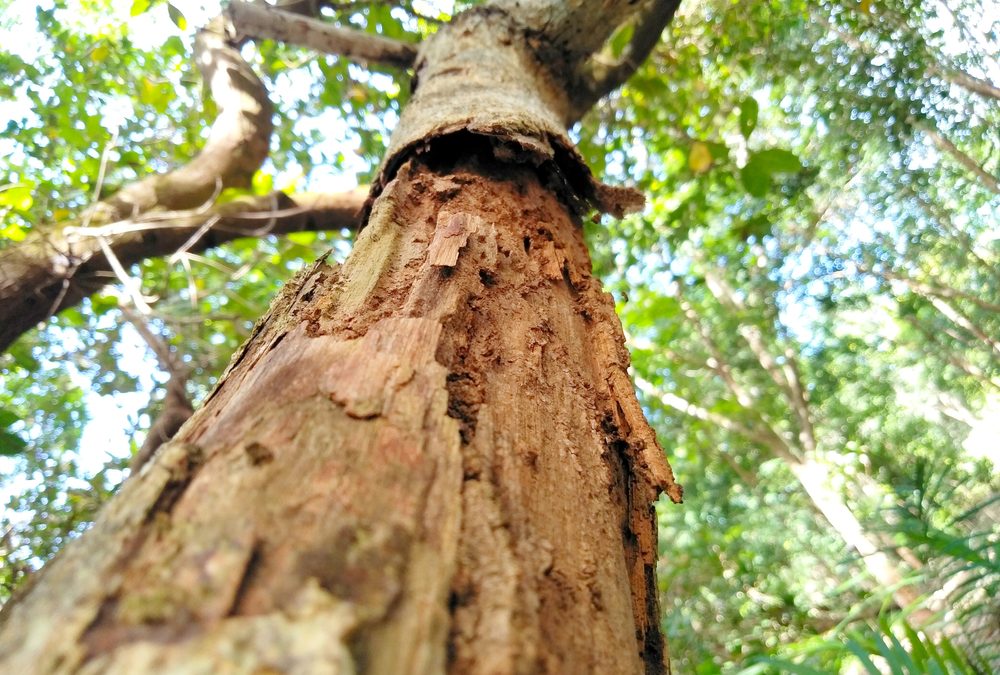
The bark of a tree should be relatively uniform and intact. Deep cracks, sunken areas, or peeling bark can signal internal decay. Cankers, which are sunken and dead patches of bark, are often signs of bacterial or fungal infections.
Fungal Growth at the Base of the Tree
Mushrooms or fungal growth at the base of a tree are red flags because they typically indicate internal rot, especially in the root system or trunk. Once decay has progressed to this stage, structural integrity could be compromised.
Dead or Dropping Branches
While occasional branch die-off is normal, branches dropping frequently or in large quantities is not. This can indicate that the tree is under stress or suffering from internal decay. Trees with dead limbs are also more likely to shed branches during storms and create safety hazards.
Visible Pests or Exit Holes
Many insect infestations, like emerald ash borer or bark beetles, leave behind signs like small holes in the bark, sawdust-like material, or visible insects. These pests can weaken trees and often bring disease with them.
Work with a Professional for Your Commercial Landscaping Needs
Our experienced team is here to help you protect your landscape, reduce liability risks, and maintain a safe, beautiful environment for everyone who visits your property. Contact our team today to schedule a consultation and let us create a custom care plan for your property. Give JFC Grounds Maintenance a call at (410) 655-2887.